The dip in front of the withers.
Your horse is showing you how he carries himself. Standing still.
A free 12-page guide with the five signs I check on every horse, before I ask for a single step. You can check all five this afternoon, at the grooming place, without asking your horse to move.
Most people meet their horse's body the day something goes wrong.
A rein that won't get light. A canter lead that isn't there. A saddle that suddenly doesn't fit.
By then the horse has usually been telling the same story for a long time. Quietly. In the way he stands, hour after hour, in the twenty-three hours he is not being trained.
Standing still is not nothing. It's a posture diary your horse writes every day.
This guide teaches you to read it.
Five signs, one story
- The dip just in front of the withers, and why it's a readout of his whole balance
- An underneck stronger than the topline: which muscles he's really holding himself up with
- The front leg that keeps quietly stepping out of the job
- Uneven front feet, the most honest record a horse keeps
- Why he feels like two different horses, left and right
Five windows onto one thing: his balance. Reads in 15 minutes. Checked on your own horse in two. Plus a note on the research behind it, in case you want to go deeper.
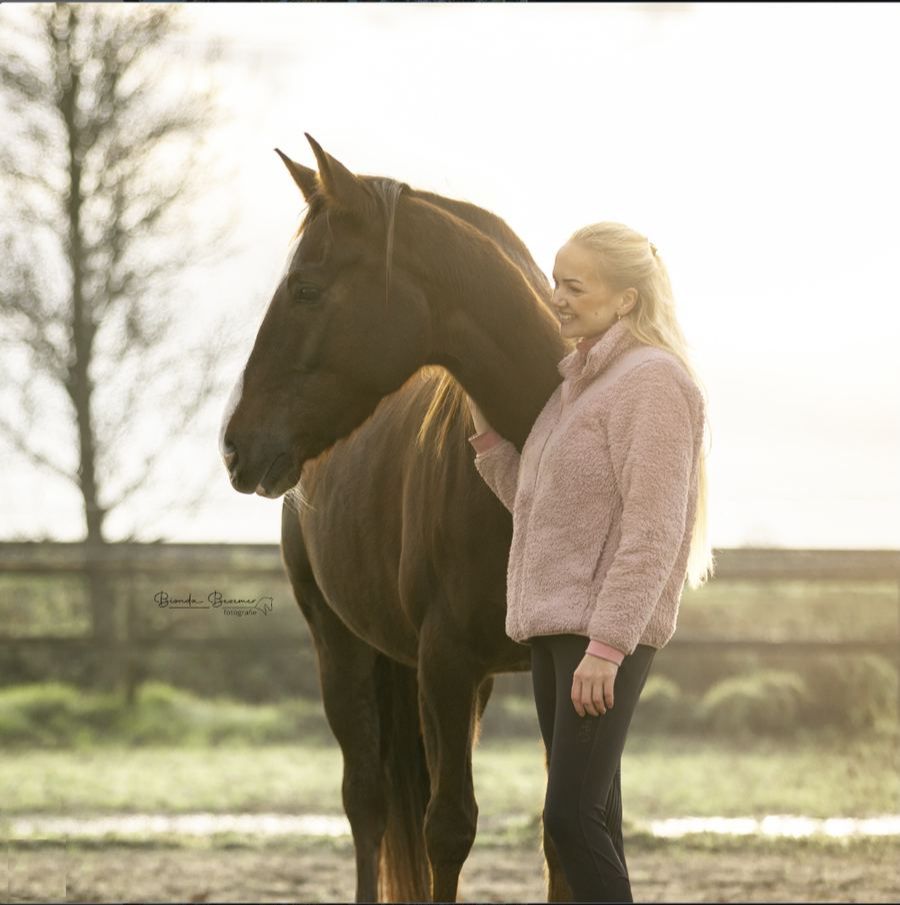
You cannot train what you cannot see. So we start with seeing.
I've had over a thousand horses in my hands, and I open every first session the same way: I look before I ask. This guide gives you that exact first look. The same five checks, in plain language, with what each one is telling you.
After reading, you'll stand next to your horse for two quiet minutes and see more than most riders ever do. That's your starting point. And it's worth more than any exercise you could do this week.
Go stand with your horse. Take your two minutes.