How fast does that become "he has stomach pain"?
Before you correct it, read it.
A free short guide on the space between what you see and what you think it means. Four steps and seven questions I run through before I decide anything in training, so your next step fits the horse in front of you.
Most training decisions are made in one second: the second between seeing and explaining.
"He's lazy." "He has a weak back." "He leans on the outside rein." Every one of those feels like an observation. None of them is. They are explanations, and each one quietly decides what you do next: more leg, another exercise, another supplement. The label was never checked.
I would rather describe first and ask before I explain. That is what I practise in my orthomolecular studies, and it is the skill that gets skipped most often in the arena.
This guide teaches you to read it.
Four steps, seven questions
- Describe, don't name: the difference between what you saw and what you concluded, with examples side by side
- The seven questions I ask before I explain anything: when, when not, both sides, since when, what changed, what was tried, and the other twenty-three hours
- Everything talks to everything: nutrition, movement, comfort, recovery and the nervous system, and when to bring another professional in
- Ping-pong your hypotheses: how to phrase an explanation so it leaves room for new information, and how to test one thing at a time
Three pages. Reads in ten minutes. Changes what you see in your very next session.
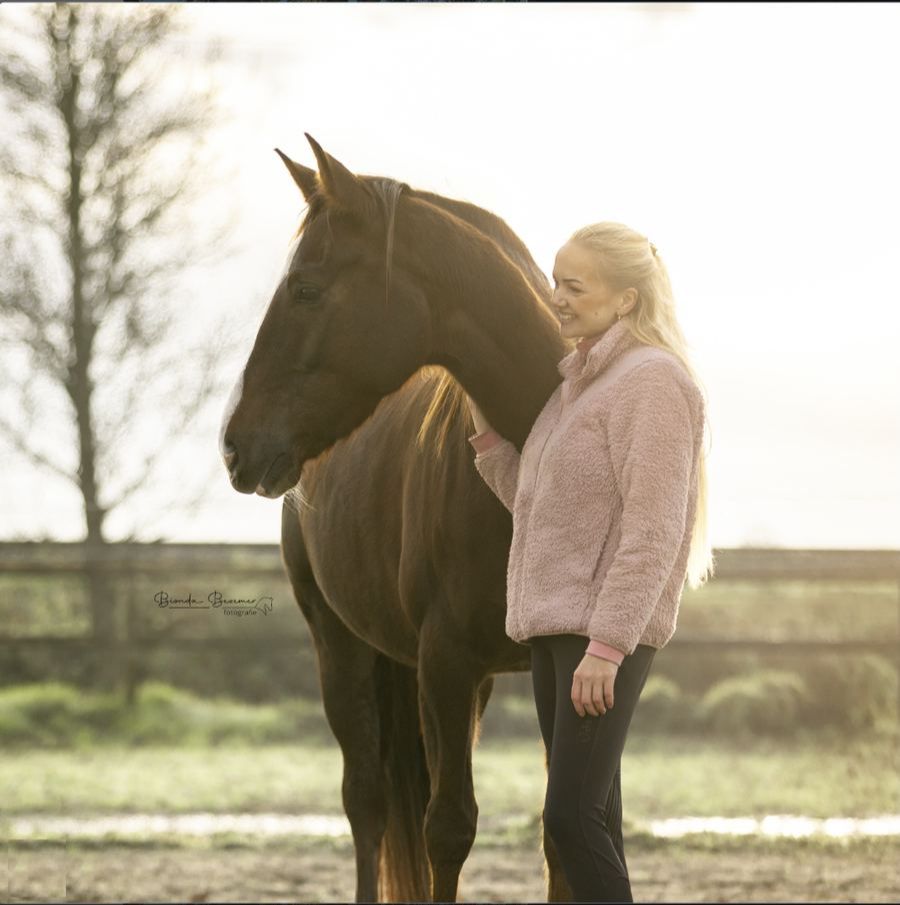
Describe first. Then decide what it means.
I've had over a thousand horses in my hands. The horses that struggle to build muscle, tire quickly or find certain movements hard are rarely the ones with a problem to correct. They are the ones showing me where the work has to start.
Train Your Eye is a series of short guides on exactly that: separating what you see from what you think it means, so your next step fits the horse in front of you.
Next time you watch your horse, describe what happens before you give it a name.